
The boss tracked the employees as they worked from home
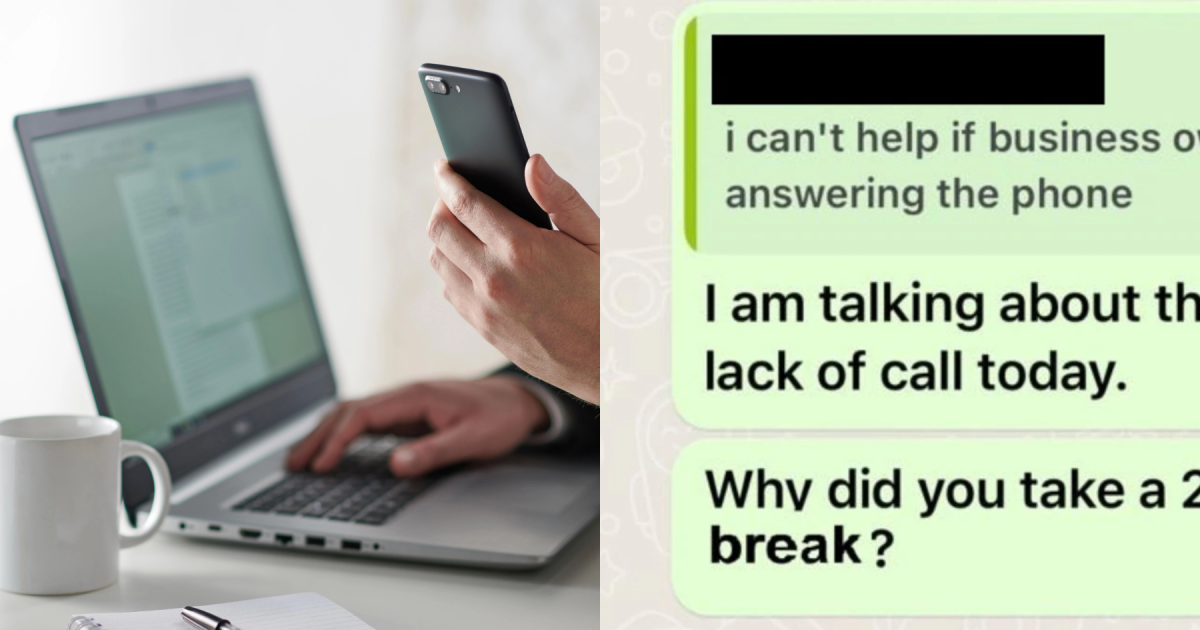
Boss Fires Three Employees Working From Home After Checking Their Call Logs
Since the pandemic hit the US hard in 2020, working from home has become pretty standard for many jobs.
Indeed, during those challenging times, many people found themselves working from their home offices every day.
As things started to stabilize, however, many employers began to offer a hybrid model, allowing employees to split their time between working from home and the office.
Those who work from home often confess that they might step away from their desks now and then to tackle some laundry or vacuum the house.
But this flexibility can sometimes lead to trouble—as one Australian woman discovered when she was fired after her boss used keystroke technology to monitor her productivity at home.
In a related story from Australia, another boss became suspicious that some of his staff were slacking off, so he started investigating.
For a manager, it’s particularly challenging to monitor an employee’s productivity when they are working remotely.
This boss believed his team was taking things a bit too easy, so he decided to check their call logs.
He began to suspect there was a problem when he noticed that the work group chat was quieter, emails were being answered more slowly, and calls were often going unanswered.
The boss, who remains unnamed, noted: "The time between calls started to get longer. Instead of a call every 15 minutes, it was every 20 minutes and then every half an hour. And then there’s like two hour gaps of nothing happening … it showed staff being absent; starting small, but the absence would get longer and longer."
With his suspicions mounting, he decided to implement some monitoring software.
"We did have some tracking in place through our CRM (Customer Relationship Management) system, Pipedrive," he explained.
Pipedrive is a cloud-based software that functions like a calendar where staff can log tasks, reminders, and scheduled or completed calls.
He elaborated: "So typically, a salesperson is probably going to get between four and 10 calls an hour. Someone might ring and they’re busy, they might say call me back in half an hour. So that’s logged as a one-minute call. And then they might have another conversation for say five-to-ten minutes. And for each call you put a note — but those things started to not happen. No notes were being left."
It turned out that many calls were not being logged at all, and several were 'ghost calls'—or fake entries.
After monitoring his workers for 18 months, he concluded that three of them had to be let go due to 'insufficient work'.
He admitted that keyboard tracking might be necessary if an employer feels taken advantage of.
"Many of us have that friend a couple of degrees of separation away who’s boasting about taking their employer for a ride, in some way or another, especially during the pandemic," he mentioned.
"Staff knew their businesses had vulnerabilities. It was hard to recruit, operating was difficult. And they leveraged that to be a bit more mischievous. Sometimes employers are made out to be the bad guys — but some of us are just small companies doing our best."
More In News
News
 Nine Spectacular Light Pillars Illuminate the Night Sky in an 'Otherworldly' Display
The mysterious light display was recently visible to some people in Japan.
May 25, 2024
News
 Boss Fires Three Employees Working From Home After Checking Their Call Logs
The boss tracked the employees as they worked from home
May 02, 2024
News
 7-Year-Old Girl Raises $15,000 For Mom’s Headstone Through Lemonade Stand
Emouree just wanted to make sure her mom wasn't 'left out', but the generosity of str...
Apr 24, 2024
News
 Mystery Surrounds Humpback Whale Found Dead In Amazon Jungle With No Clear Explanation How It Arrived There
Experts were baffled over the discovery
Apr 24, 2024
News
 Mystery Surrounds Full-Sized Two-story House Floating In San Francisco Bay
The boat managed to successfully navigate itself past Alcatraz Island
Apr 24, 2024